Never wash pure silk at home
Silk dyes — especially the deep reds, greens and blues of wedding sarees — are often not fully stable in water. A home wash can bleed colour into the pallu and border in minutes and cannot be undone. Real zari (metallic thread) also tarnishes with water and detergent. Pure silk sarees should be dry cleaned by someone who tests dye stability on an edge before choosing a process.
Iron warm, never hot, and never directly on zari
Heat is what dulls and breaks metallic thread and leaves shine on silk. If you must press at home, use the lowest silk setting, a dry cloth between iron and saree, and keep the iron moving. Steam from a distance restores drape more safely than pressure.
Store folded, refold often
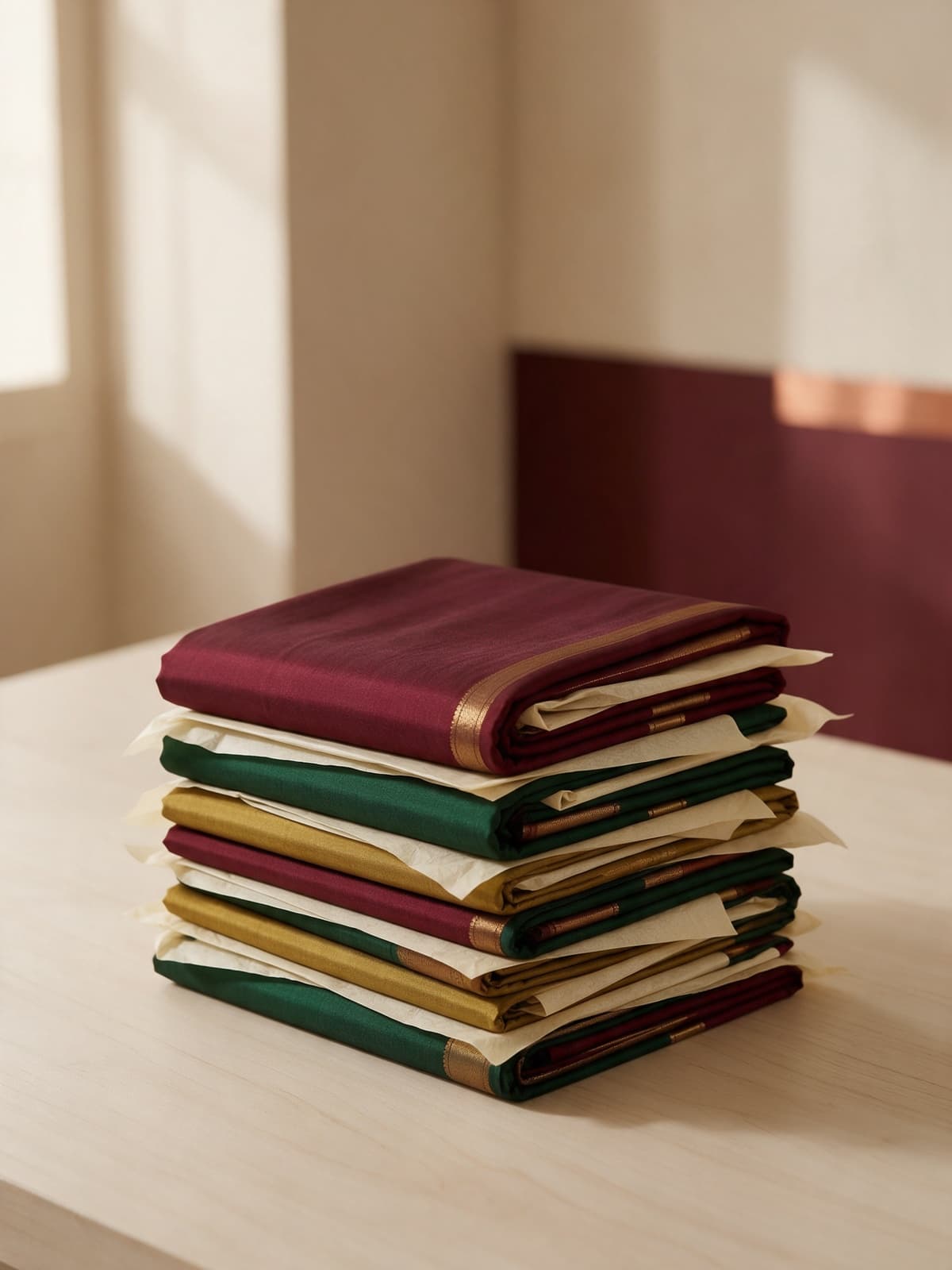
Silk breaks along a fold that has been pressed for years — the classic split down the middle of an old saree is a storage injury, not age. Fold with the zari inwards and acid-free tissue in the folds, in a cotton or muslin cover, and refold every few months. Keep it away from sunlight and naphthalene.
- Zari folded inwards
- Tissue in the folds
- Cotton or muslin cover, never plastic
- Refold every 3–4 months
- Dark, dry shelf
What can be revived — and what can’t
Dull silk can usually be cleaned and steamed back to drape. Zari that has tarnished on the surface can often be brightened. Zari where the metal itself has corroded cannot be reversed, and set dye bleed cannot be reliably removed without risking the surrounding colour. A good specialist will tell you which case you have before starting, and ask before attempting anything with risk.