
Skip to content
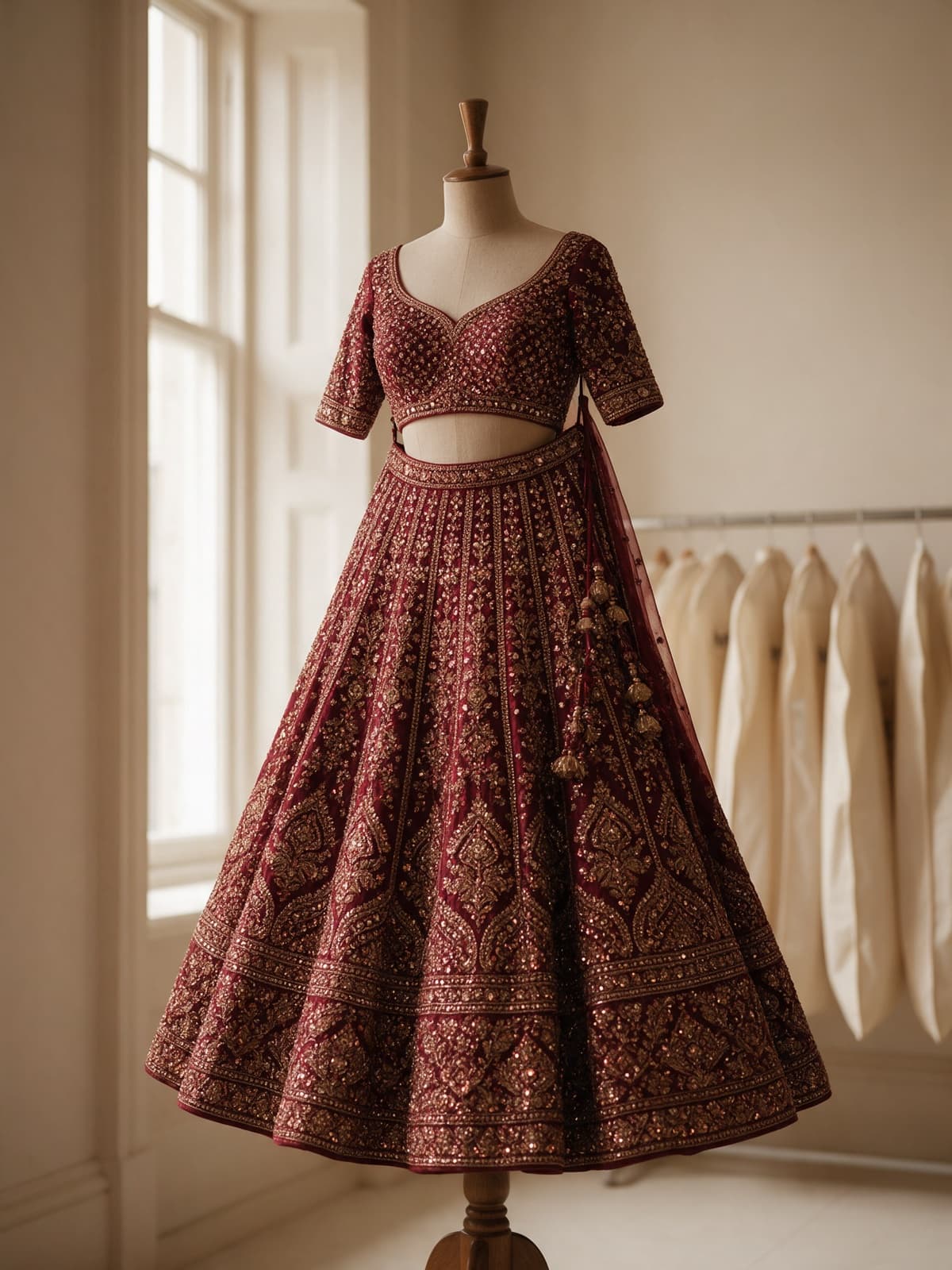
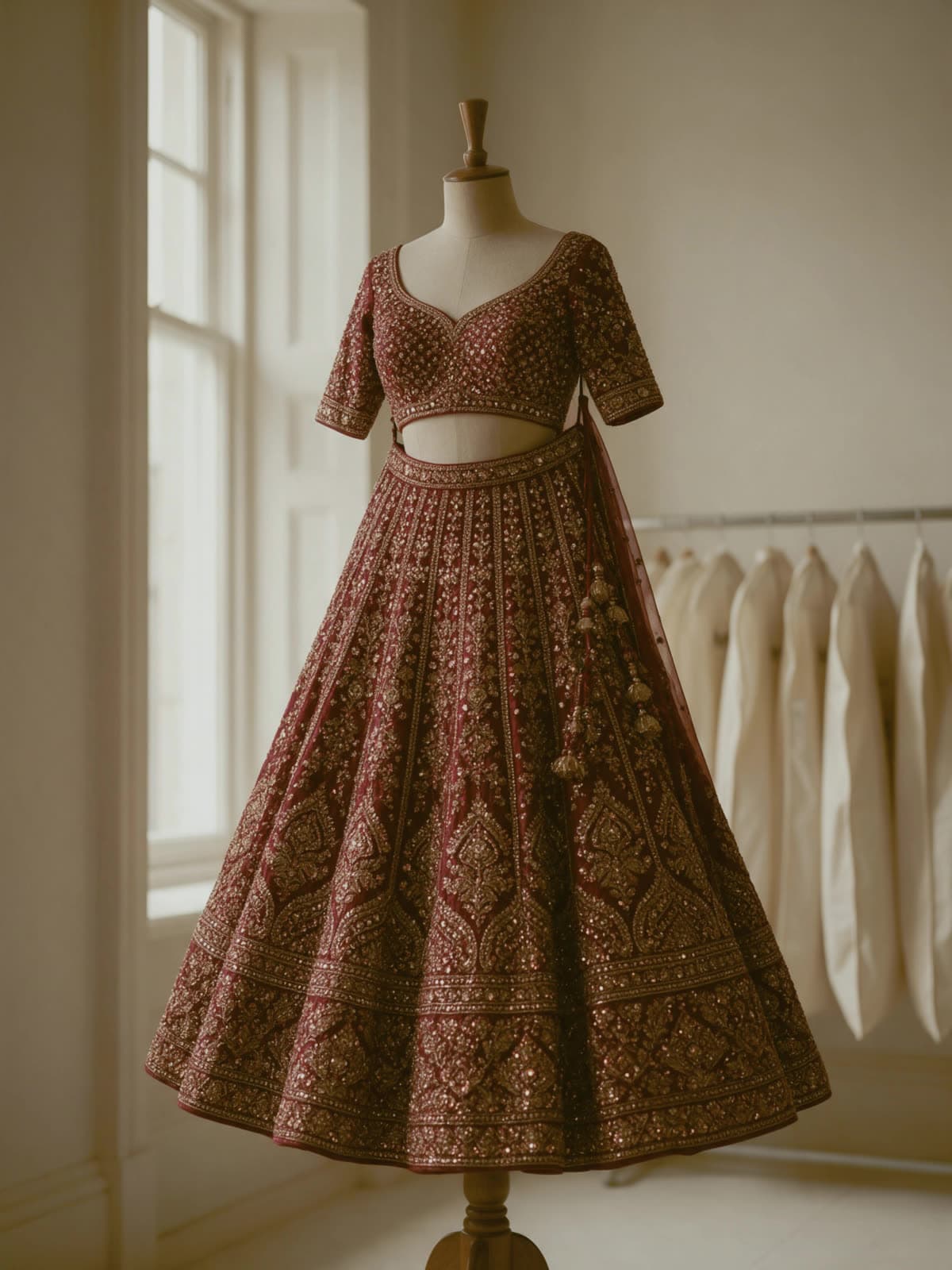
An embellished maroon bridal lehenga on a dress form by a window in the SKVO atelier

Wedding & couture

A bridal lehenga, three weeks after the wedding

Heavy zardozi on silk, sweat at the underarms, a ghee mark at the hem — and a family that wants it kept for a daughter.

The piece

As it arrived.

Silk with dense zardozi and stone work, a lined skirt that weighs several kilos, perfume and sweat at the blouse, one ghee mark on the hem from the reception. Worn twice. Nothing visible yet, which is exactly when to act.

What we did

Five steps, each on the record.

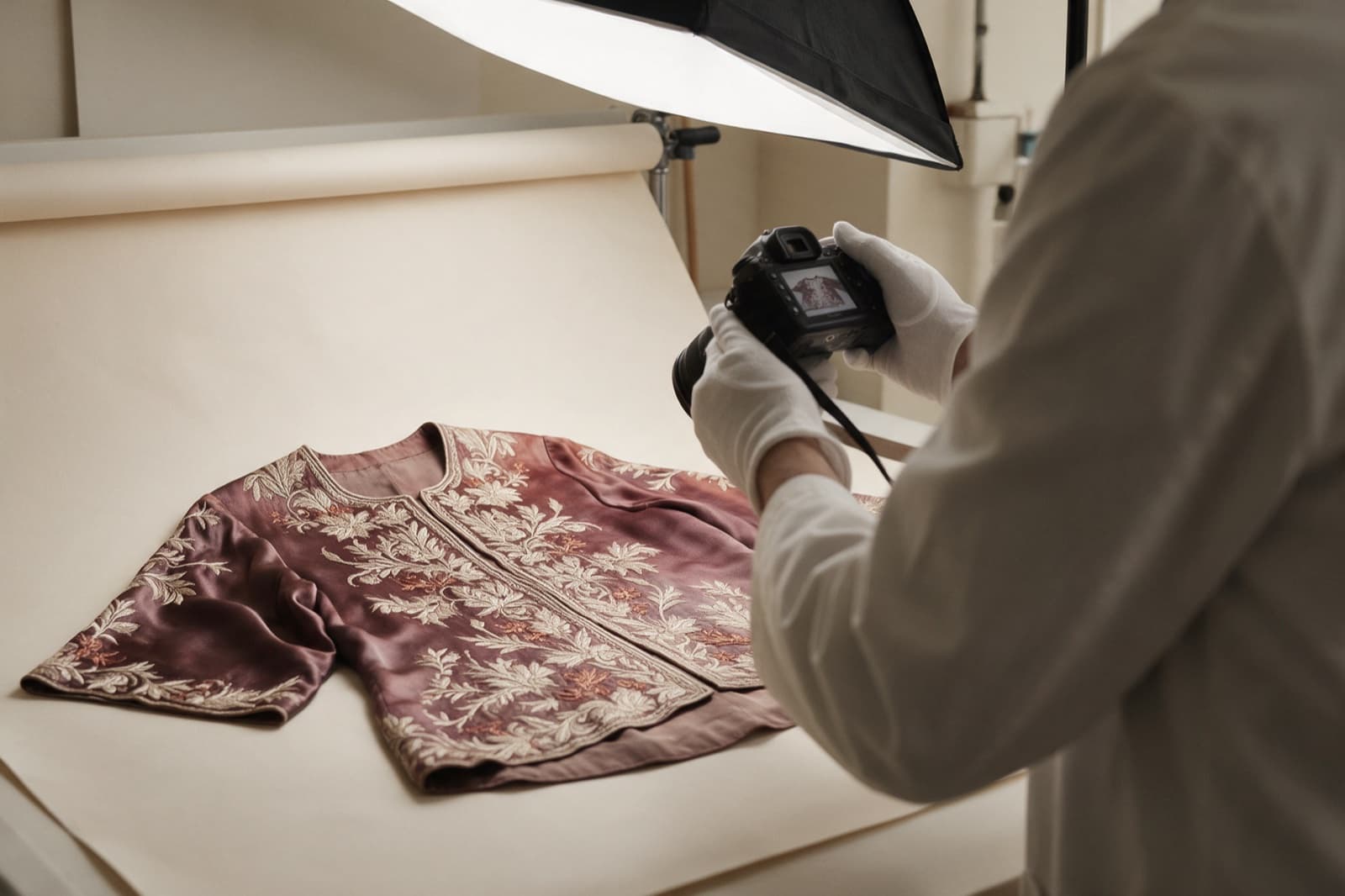
  1. A specialist photographing an embroidered garment under a softbox at intake01

    Photographed and recorded at pickup

    Every panel, every mark, the loose stone near the waist. A declared value is written down with the family.

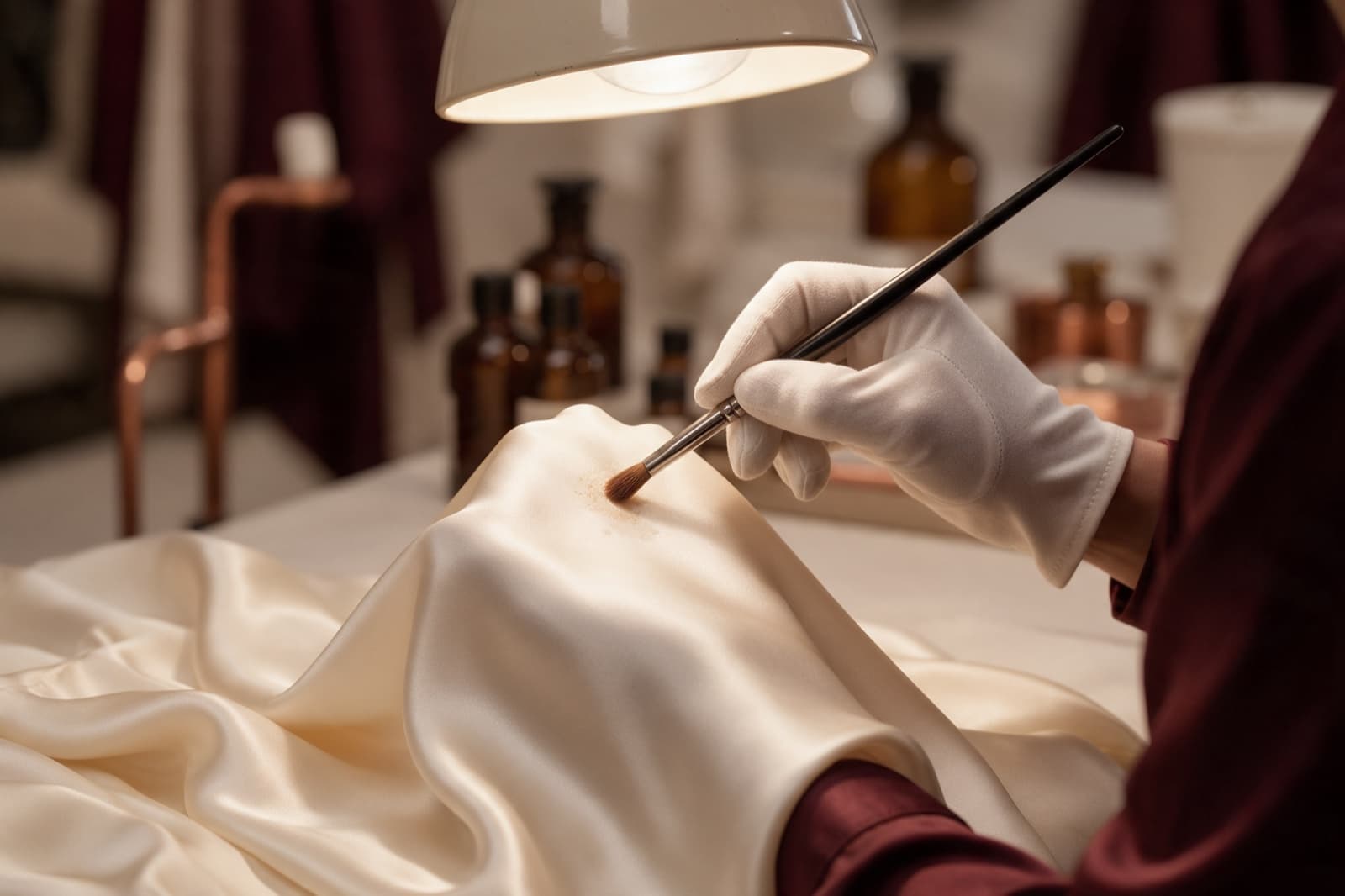
  2. A gloved hand testing a treatment on a hidden seam of silk under a lamp02

    Dye and stone tested on a hidden seam

    Solvent and hand-wash tests on the inside of the hem before anything touches the visible silk.

  3. A tagged maroon garment on a rail in the atelier03

    Cleaned by hand, section by section

    The ghee mark is lifted first, cold. Then the skirt and blouse are cleaned in sections with the embellishment protected, never in a drum.

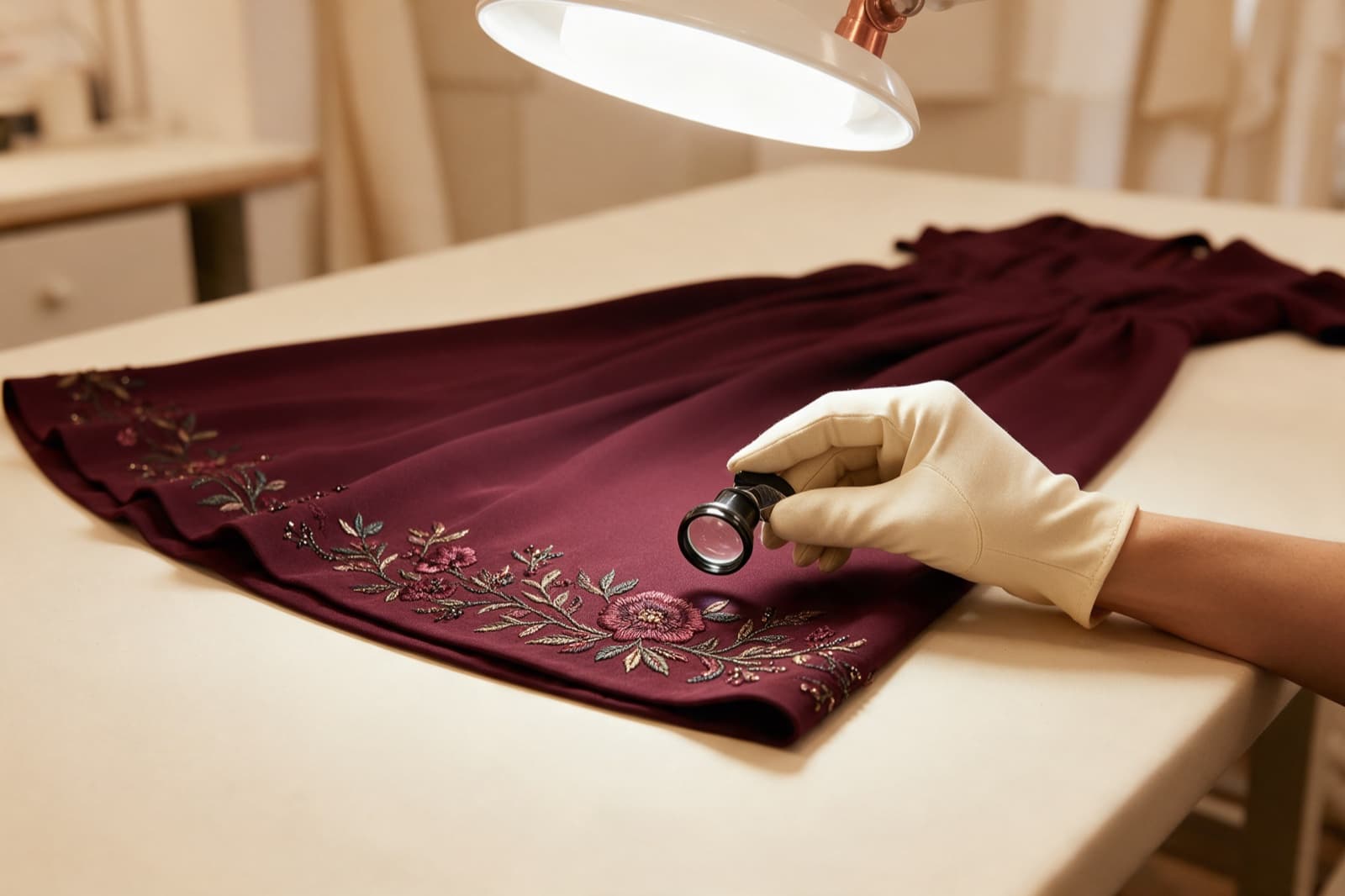
  4. A specialist inspecting an embroidered hem with a loupe under a bright lamp04

    Hand-finished and checked under the lamp

    Steamed at the right temperature for silk, every stone counted against the intake photographs, seams and lining inspected.

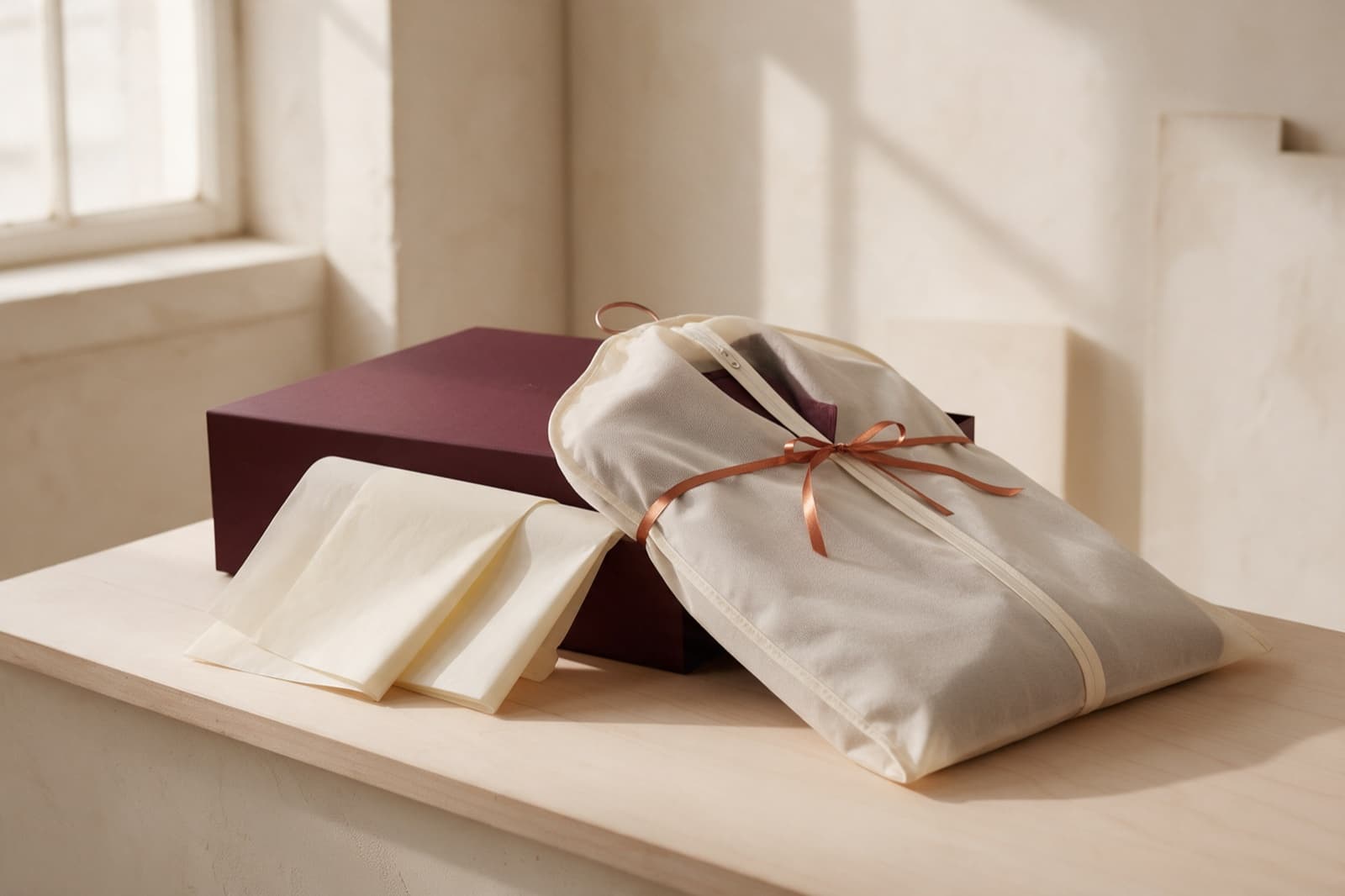
  5. A garment folded in tissue inside a cream box beside a breathable bag05

    Folded with tissue, packed to breathe

    Acid-free tissue between the layers, a breathable cotton bag, a note on how to refold it. Ready for storage or the next function.

The result

What went back.

Back in about nine days, in a breathable bag, with the intake photographs and a storage note. Nothing set, nothing lost, nothing to discover later.

  • 9days, typical
  • 5stages by hand
  • 100%photographed at intake
The lehenga after cleaning, colour and zari restored
The same lehenga before cleaning, dulled and yellowed at the hem
Illustration. A real before-and-after pair from the atelier, with the customer’s permission, replaces this before launch.

In detail

For those who want to read.

Service: Wedding & couture · Quoted after inspection · 7–10 days

Why three weeks matters

Sweat, perfume and food residue oxidise slowly. A lehenga that looks clean on the night comes out of the cupboard a year later with yellow patches at the underarms and hem that were never visible. Those set stains are the hardest kind to lift on silk with zari, and sometimes cannot be lifted safely at all. Cleaned within a few weeks, almost everything comes out.

How embellished silk is actually cleaned

Not in a machine. A lined, stone-worked lehenga is cleaned by hand in sections, with the embellishment protected and the solvent or wash chosen after a test on a hidden seam. Zardozi and sequins are attached with thread or glue that a drum would loosen; a loose stone at intake is recorded and reattached, not lost in a filter.

Finishing is by steam at the temperature the silk can take, never a hot iron on metal thread. The piece is then checked under the brightest light in the building against its intake photographs — stones, seams, lining, colour — before it is packed.

What we tell you before return

Any stain we could not remove safely, any risk we chose not to take, and anything we needed your consent for. You never discover a limitation on your own. This, plus the photographs and the declared value, is what makes the guarantee real rather than written.

Storing it for the next generation

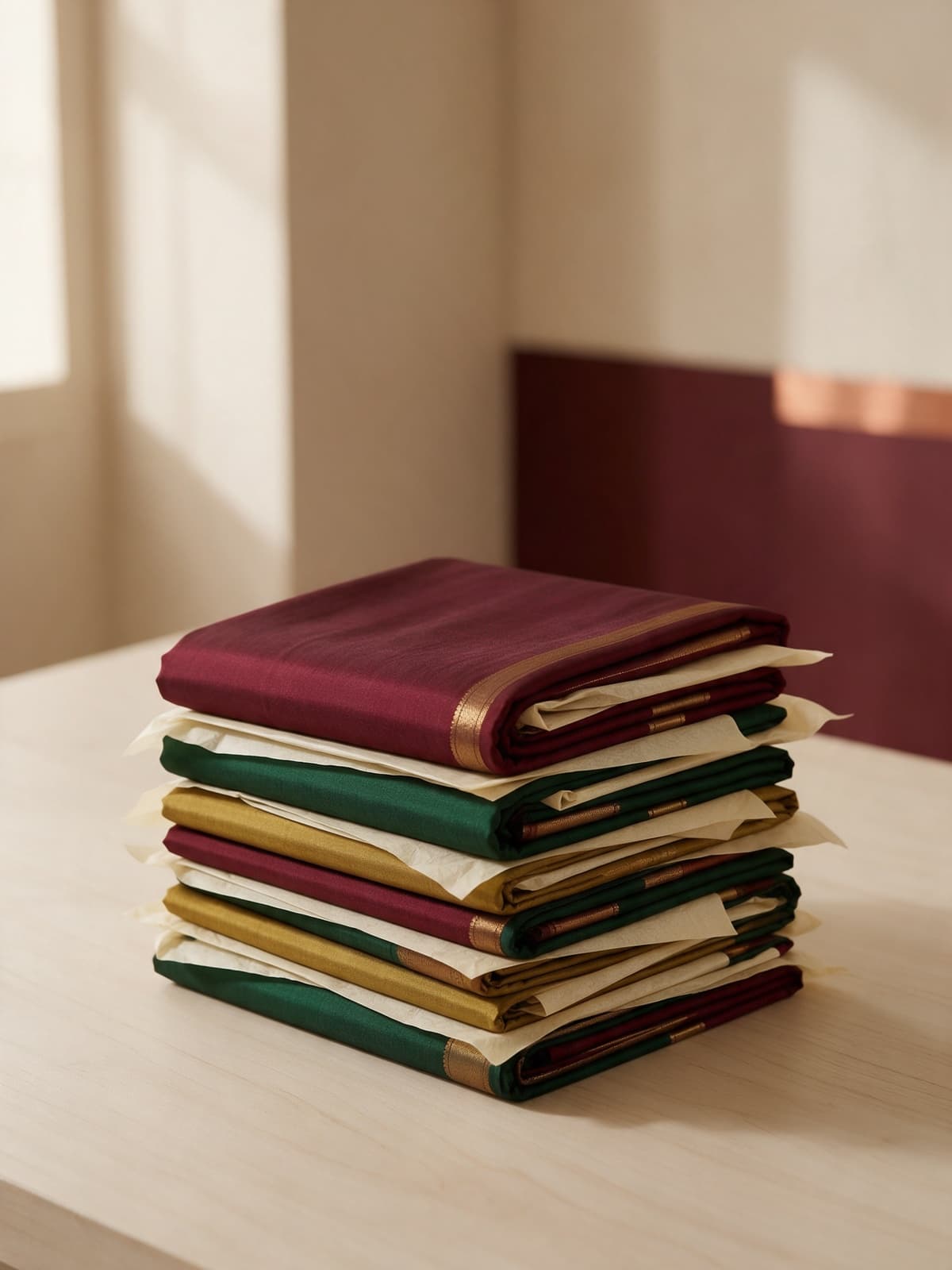
Folded, not hung: the weight of the work pulls on the waistband for years. Acid-free tissue between layers, a breathable cotton bag or box, never plastic in Surat’s humidity, refolded along different lines every few months. We can also keep it at the atelier between functions or from one season to the next.

Gallery

  • The lehenga on a dress form
    The lehenga on a dress form
  • Photographing the piece at intake
    Photographing the piece at intake
  • Testing on a hidden seam
    Testing on a hidden seam
  • Quality check under the lamp
    Quality check under the lamp
  • Packed in tissue and a breathable bag
    Packed in tissue and a breathable bag

Questions

About this kind of piece

How long does a bridal lehenga take to clean?

Typically 7 to 10 days for a full clean by hand, including testing, finishing and the quality check. A pre-event steam and press is faster: three days is usually enough.

Can stones and zardozi be cleaned without damage?

Yes, by hand in sections with the embellishment protected, after a test on a hidden seam. Every stone is counted against the intake photographs before return. A loose stone at intake is recorded and reattached.

What does it cost?

Couture is quoted after we see it, because two lehengas can differ by an order of magnitude in work. Send photos and a specialist replies with a firm number within hours.

Have a piece like this one?

A photo on WhatsApp is enough. We reply with what we would do, how long it takes and what it costs.

Book on WhatsAppCall