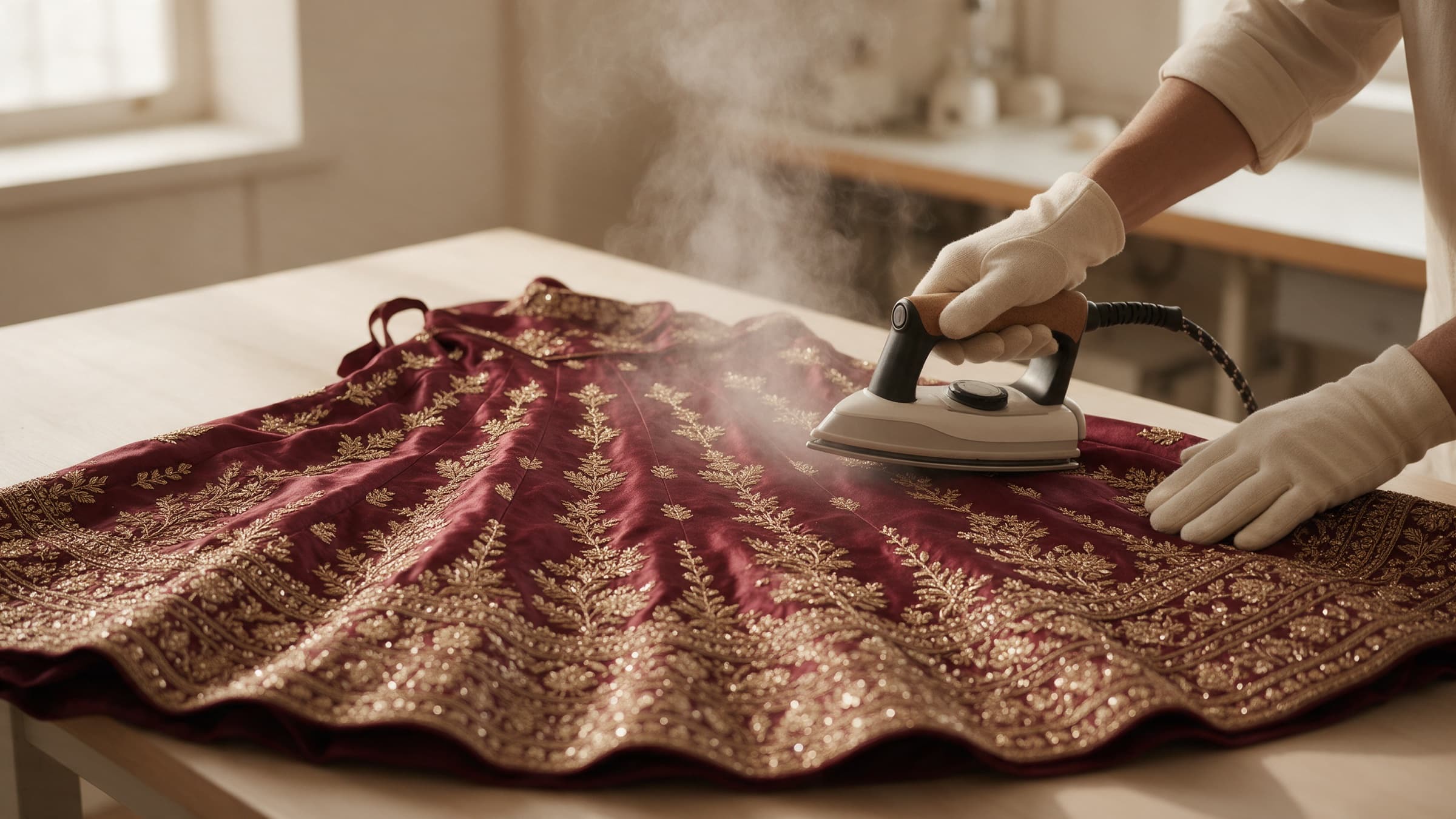
The first hour: what to do at the table
Most Diwali damage is done in the first minutes — by the instinct to rub. Ghee, oil from a farsan plate and the syrup of a jalebi all spread when rubbed, and on silk they push into the weave where they are far harder to lift later.
Blot, never rub. Press a clean, dry tissue or a soft cotton napkin onto the mark and lift it away; repeat with a fresh corner until nothing transfers. For a fresh oil or ghee mark on silk, a light dusting of talc or cornflour left for twenty minutes absorbs what a napkin cannot; brush it off gently, do not wet it. Then leave the stain alone and bring the piece in within the week.
- Blot with dry tissue; do not rub or scrub.
- No water on silk, zari or anything with a lining — it rings and shrinks.
- No home remedies (lemon, vinegar, dish soap) on festive wear; they set some stains and strip some dyes.
- Photograph the stain in daylight so we can see it before pickup.
Silk and zari: what the festival does to them
Silk takes oil readily and holds it invisibly; a mark that looks faint on the night oxidises over a few weeks into a yellow patch that is much harder to remove. Sweat at the neck and underarm does the same, and it is the sweat-and-perfume combination that yellows a saree’s blouse and pallu by the following season.
Zari and metallic threads tarnish with moisture and with the acids in sweat. The remedy is speed: cleaned within a week or two, almost everything lifts. Left for months, the same marks can become permanent, and the fix — if there is one — costs far more than the cleaning would have.
Diya soot and rangoli colour
Soot from a diya or a sparkler is a fine, greasy carbon. Never wipe it: shake or tap the fabric from the reverse side and let a specialist lift it with the right solvent. Rangoli powder is the opposite — a dry pigment that stains only once it is wet. Brush it off outdoors while it is dry, then bring the piece in if any colour remains.
Candle and ghee-lamp wax on a dupatta or hem should be left to harden. Do not pick or iron it; the iron drives the dye of the wax into the fibre. We remove it in stages, cold.
Kurtas, sherwanis and bandhgalas
Structured menswear carries the festival at the collar and underarms. A sherwani or bandhgala that has been worn for two evenings should be cleaned and pressed before it goes back in the wardrobe, not aired and hung — sweat sets in the canvas and lining just as it does on a saree. Cotton and linen kurtas can be laundered normally; silk and brocade kurtas should be dry-cleaned.
New clothes: the first wash decides the rest
Diwali is when most new festive wear is bought, and a new garment’s first clean is the one that sets its colour. Deep reds, maroons and indigos in particular can bleed on first contact with water. Never wash a new silk, and never wash a new cotton in the same load as anything pale. Bring new heavily-dyed pieces in for their first clean so the dye can be stabilised in a controlled process rather than in a bucket.
After the season: store it clean
Everything worn during the festival should be cleaned before it is stored — even the pieces that look fine. Invisible sweat and oil are what yellow a garment over a year in the cupboard. Store silk and zari folded in acid-free tissue inside a breathable cotton bag, never plastic; Surat’s humidity plus a plastic cover is how mildew starts. Add moth-proofing to woollens and shawls, and refold heavy pieces every few months.
If the pieces are only worn once a year, ask about seasonal storage: cleaned, wrapped, moth-proofed and kept at the atelier until you need them.